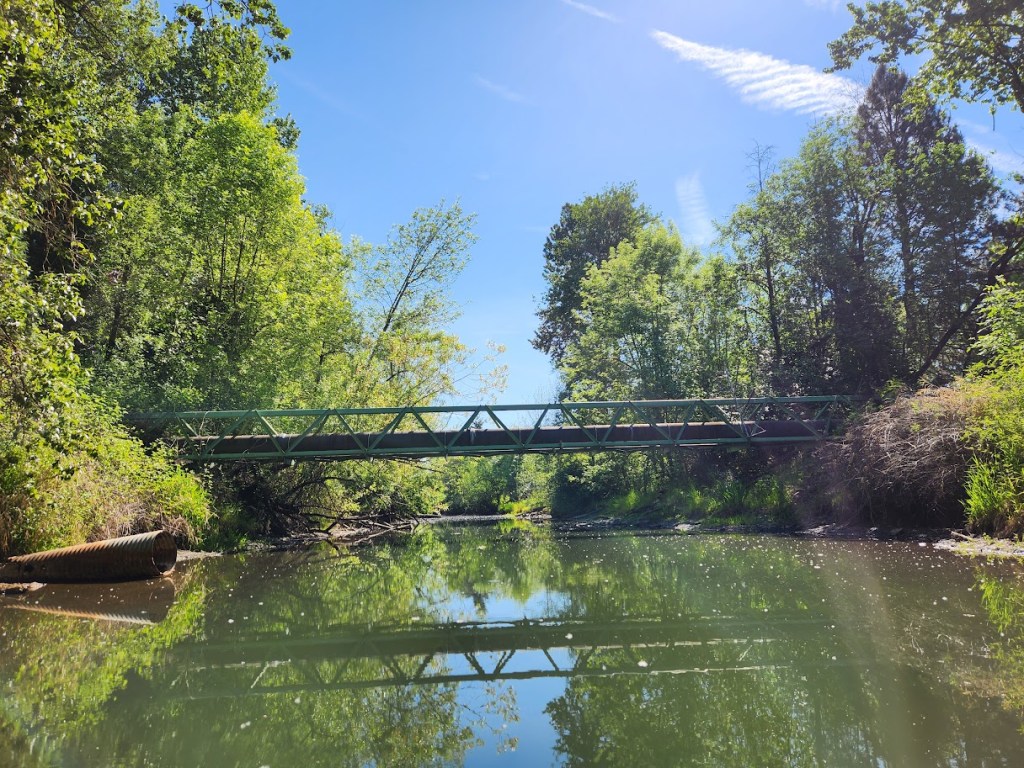
I’m a huge proponent in learning about your natural surroundings. What are the native species in your area? What are the bodies of water near you, and the mountains and hills that surround your region that make up the local watershed? Do you know where your tap water comes from? I encourage everyone to attend free events to learn more about their surroundings. It’s a great way to meet interesting individuals and learn about the “behind the scenes” people that help run our city!
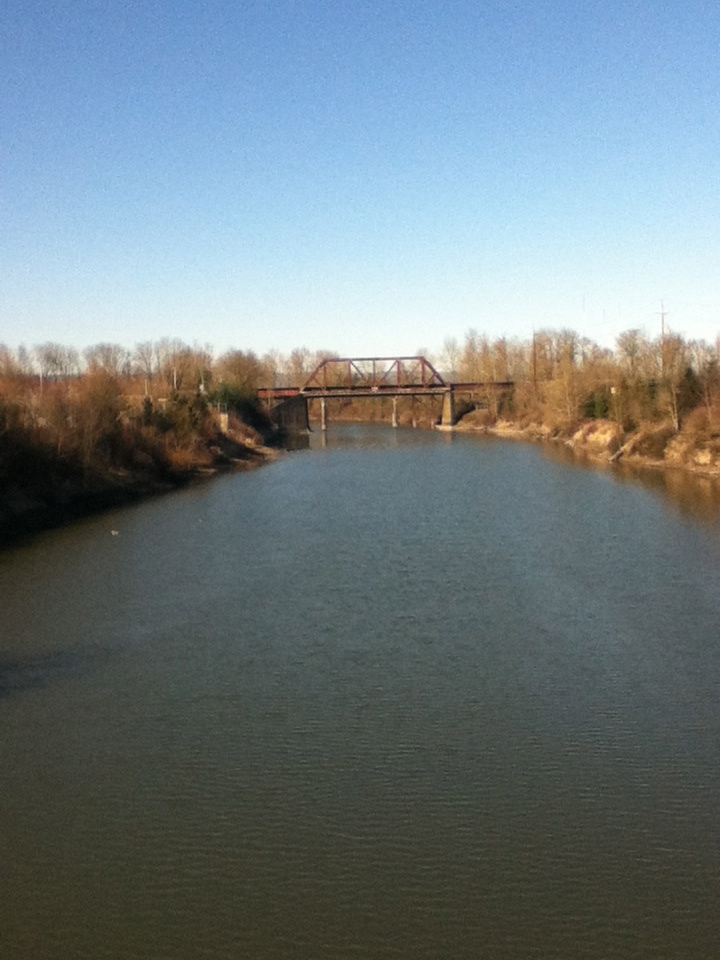
-Columbia Slough near Columbia Blvd. Wastewater Treatment Facility-
I shared my newfound interest in the Columbia Slough in my last post, and I just couldn’t get enough, so I attended a free educational event to learn more about this enticing area. Co-hosted by the Columbia Slough Watershed Council (CSWC) and Multnomah County Drainage District No. 1, the hour-long event was a great opportunity to learn about the Columbia Slough, the watershed, and the human impacts on the water flow using flood control levees.

Byron Woltersdorf, P.E., an engineer for the Drainage District NO. 1 (MCDD), was our tour guide and educator for the event. He explained that there are four drainage districts along the Columbia River from west of I-5 to Troutdale, the watershed has 31 miles of flood control levees, and with the help of the 1936 flood act and then the revised 1950 flood act, the lower Columbia River basin is now protected from flooding with the help of levees constructed by the Army Corps of Engineers.
When the MCDD was formed in 1917, the land in and around the district was primarily agricultural. This use of land was perfect, as the annual flooding was great for adding nutrients to the soil. However, as the land use changed over time, eliminating flooding was necessary for the growing urban lifestyle.

-Drainage District NO. 1 Pump House-
After a general history lesson and Q&A opportunity, Woltersdorf gave us a tour of the pump house. Water is pumped down the slough towards the Willamette River; however, there aren’t any pumps on the lower portion of the slough. This portion is tidally influenced from its close proximity to the Columbia River, which can be influenced by as much as 1.5-3.5 feet, depending on the tide. (Pretty amazing, considering how many miles away Portland is from the ocean!) The pump house we visited at Drainage District No. 1, can pump 600,000 gallons of water a minute if every pump is running (not normally necessary).

During a Hundred Year Flood event, the stations would require to pump a million gallons a minute in a 24-hour period of time.
Speaking of power, apparently, there is not enough of an elevation difference to use the pump house as an energy source, but if the power went out during a time that the pumps needed to be running, five semi-trucks and five tanker trucks would be necessary on site to operate with a generator, according to Woltersdorf.

The MCDD meets a few challenges along the way. One interesting critter is none other than Oregon’s state animal, the beaver. There are approximately 3000 beavers in the managed flow plain. Woltersdorf explained, somewhat hesitantly, that his department is allowed to trap and kill the animals when necessary, as the beavers can be problematic. The workers are also allowed to remove dams when needed. The effectiveness of this is limited, however. Woltersdorf said that his crew took down a four-ft. tall dam once, and in only two days, the beaver erected the same size dam in the same location.
Turns out, “Busy as a Beaver,” is relevant!
Although this department is not in charge of water quality (mentioned in my previous post), Drainage District NO. 1 station takes in stormwater runoff from a 20,000-acre area of town.

Special thanks to the Drainage District NO. 1 and Byron Woltersdorf for all the valuable information and fun tour! And, to the Columbia Slough Watershed Council for all the environmental education, stewardship awareness, restoration, and relationship building they perform in the community and watershed. Please visit the site for additional information, volunteer opportunities, and announcements for future events and workshops.




 Environmental Communications
Please Leave a Reply!